
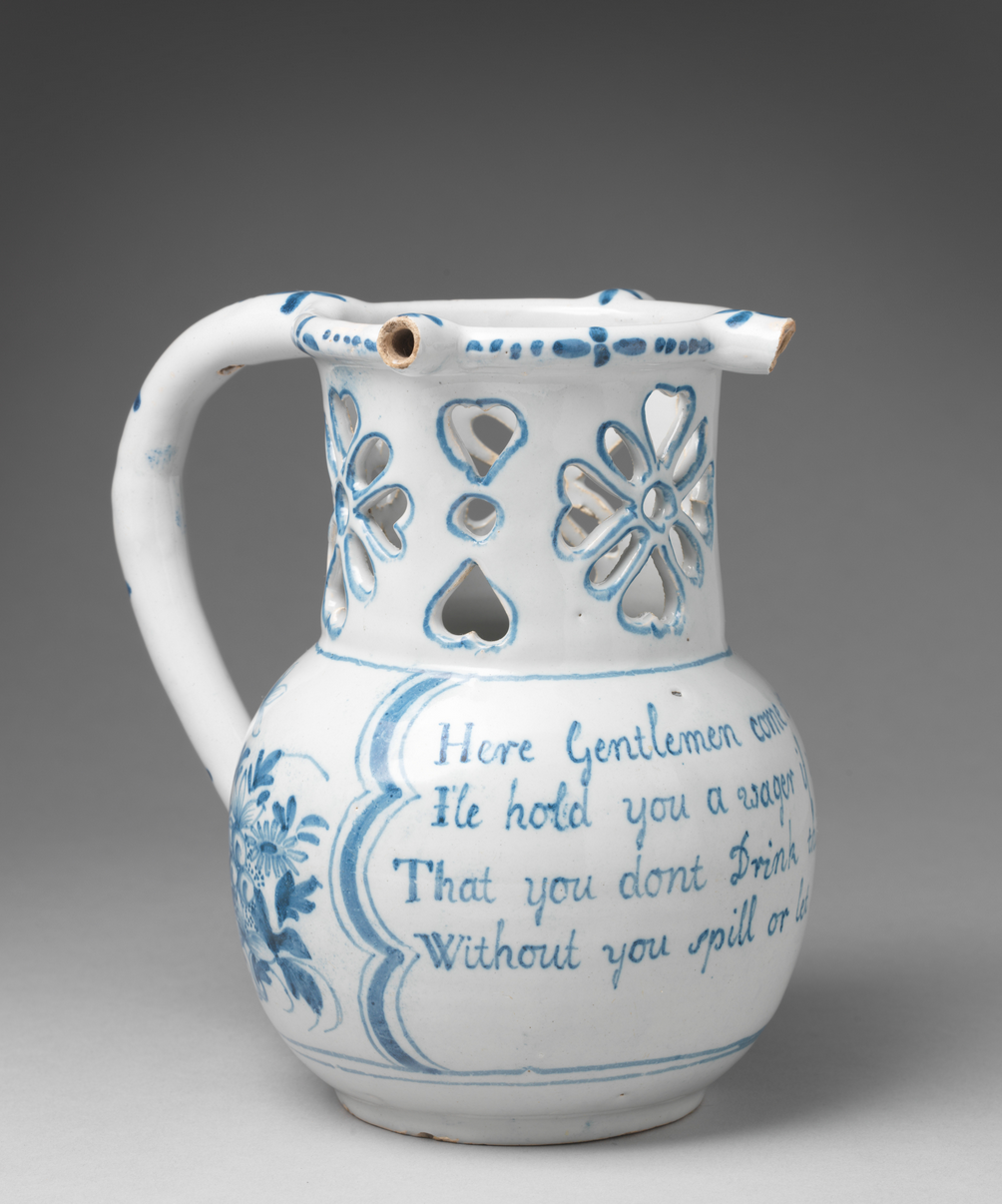
Puzzle Jug
Puzzle jug. 1770_1775, Bristol, England. Victoria and Albert Museum.
As with the Spanish porrón and the northern European Passglas, the drinking game surrounding the English Puzzle Jug is defined by the vessel’s very form—and by the cleverness required to drink from it. Riddled with holes along its neck, the jug cannot simply be poured or sipped without spilling, hence the “puzzle.”
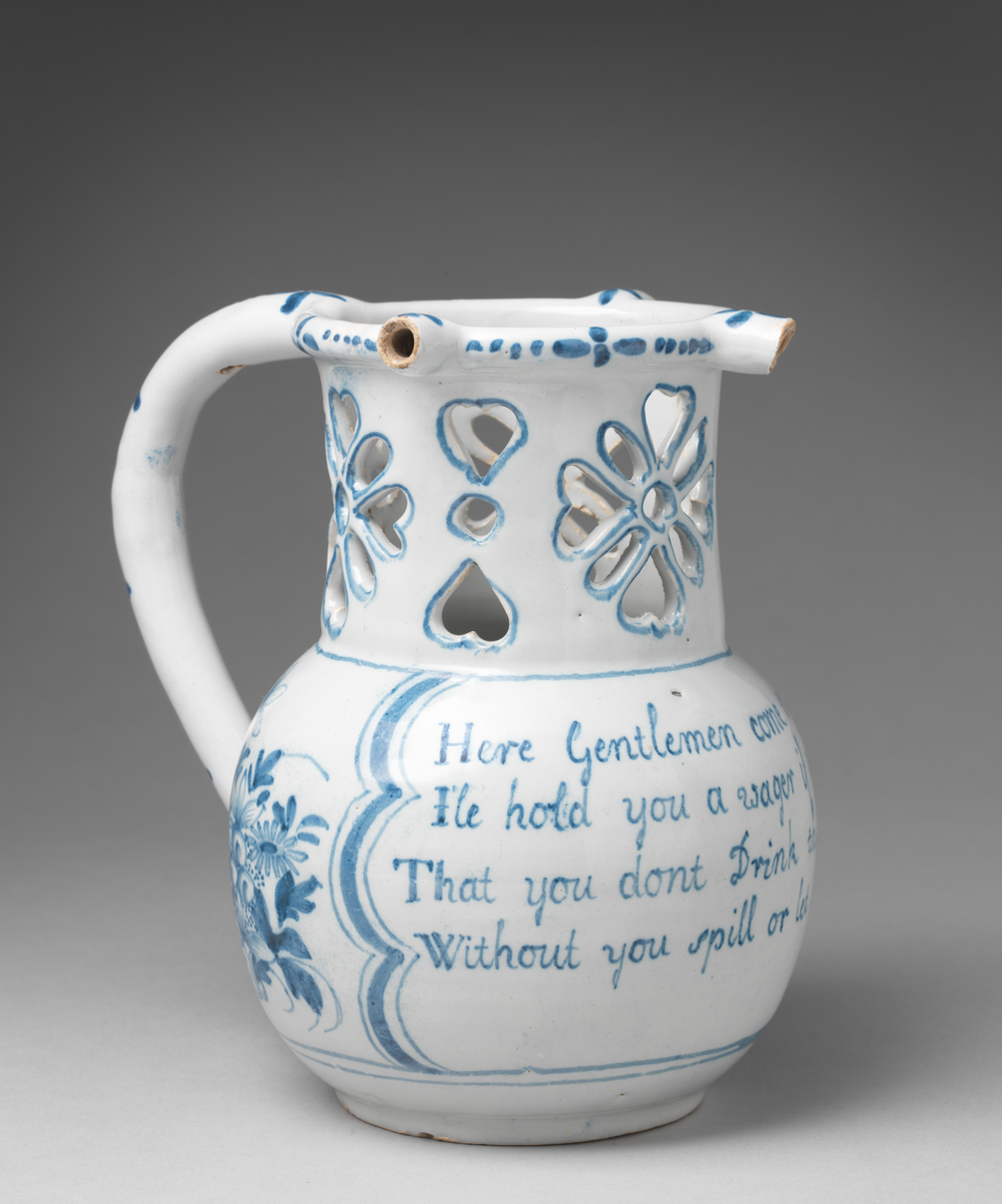
To tease the drinker further, many jugs were inscribed with playful rhymes that hinted at the challenge ahead, just like the image to the right which is from the Metropolitan Museum of Art’s collection. It reads:
“Here Gentlemen, come try your skill,
I'll hold a wager if you will;
That you don’t drink this liquor all,
Without you spill or let some fall.”

Puzzle Jug, 1771. Bristol, England. Chipstone Foundation Collection. Milwaukee Museum of Art.
Whether the solution proved baffling or obvious, the Puzzle Jug combined craftsmanship, humor, and social fun—delighting and frustrating drinkers in equal measure. These jugs were often found in taverns and homes alike, their playful designs inviting both competition and laughter. The challenge was as much about wit as dexterity: discovering which concealed tube or hidden spout allowed the drinker to sip without spilling.
Decorated with colorful glazes, raised lettering, and cheeky verses, puzzle jugs showcased the potter’s skill as well as the drinker’s good humor. They transformed the simple act of drinking into a spectacle of ingenuity and social interaction—a fitting centerpiece for any gathering.
As one 18th century example from the Milwaukee Museum of Art’s collection dares:
“My form has puzzled many a fertile Brain
The brightest Wits my Liquor could not gain
And still profusely spill it on the Ground
The Reason is no Suction they have found
Now honest Friend advance thy Genius try
Spill ne’or a Drop and strive to drink me dry.”
The art of making puzzle jugs is still present in the world today. Hip hip, hooray!
Watch ceramicist Michelle Erickson recreate an 18th-century puzzle jug from the Victoria and Albert Museum’s collection. From throwing stoneware clay on a potter's wheel, to achieving delicate detailing by carefully cutting out areas of wet clay, Erickson recreates this intricate and wonderfully infuriating device used in the 18th century for pub drinking games.