
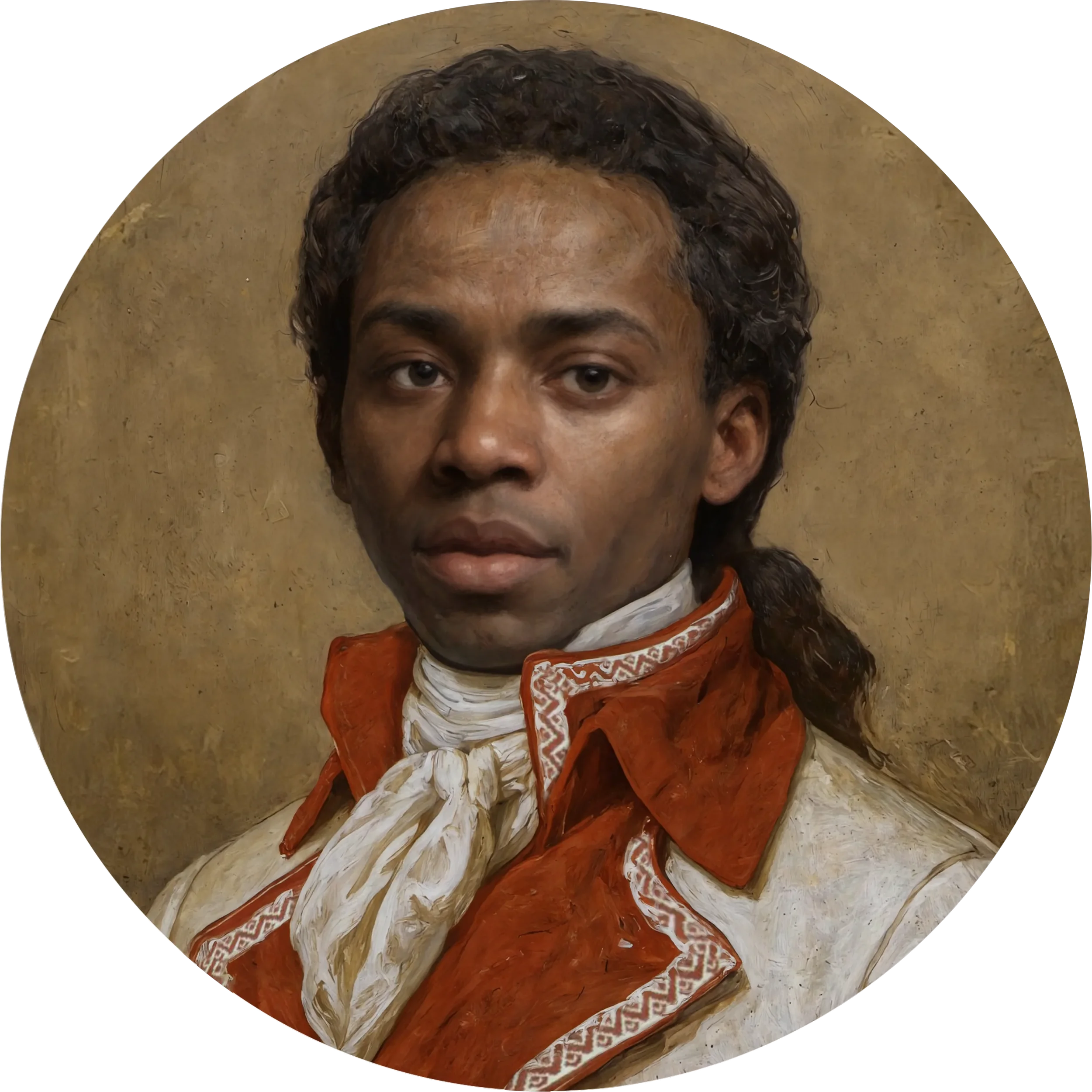
Christopher Sheels, 1776 - After 1802
Born into slavery at Mount Vernon, Christopher Sheels was the son of Alce, an enslaved spinner. At just 13 years old, he was selected to serve in George Washington’s presidential household, where he likely worked as a waiter.
After the presidency, in 1797, Sheels became Washington’s enslaved valet (personal servant) and took care of Washington’s daily needs—including his appearance—by caring for his clothes and accessories. Sheels married an enslaved woman, and they made plans to leave bondage together but were discovered. Sheels was likely inherited by George Washington Parke Custis after Washington’s death, but the record is incomplete.
Learn more about Christopher on his Faces of Mount Vernon’s Enslaved Community webpage.
THE PORTRAIT
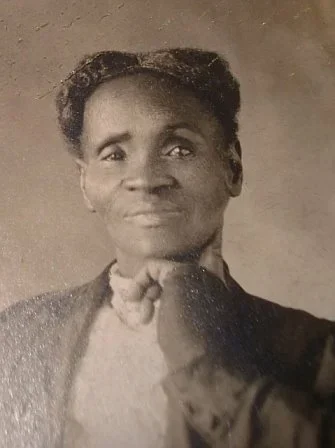
Henrietta Michie, Courtesy of the Michie/Daniels family, descendants of Christopher Sheels via Mount Vernon
No confirmed visual likeness of Christopher Sheels survives. To create his portrait, Mount Vernon relied on documentary records, contextual research, and descendant-submitted photographs.
Sheels is identified in historical records as “mulatto,” a term used in 18th-century documents to describe a person of mixed race. While detailed physical descriptions of him do not survive, this designation, combined with his age and documented roles as a waiter and later George Washington’s valet, helped guide general considerations of complexion and presentation.
A significant contribution to the portrait came from the Michie/Daniels family, descendants connected to Mount Vernon’s enslaved community. Henrietta Michie, (1841 – after 1894) was the great-grandniece of Christopher Sheels. The family provided multiple generations of photographs, which were used to build shared attributes and facial features for Sheels’ likeness. These descendant photographs helped inform skin tone, facial structure, and inherited traits.
Clothing and grooming were based on research into the attire of Washington’s valet, including late 18th-century livery standards and household dress practices.