
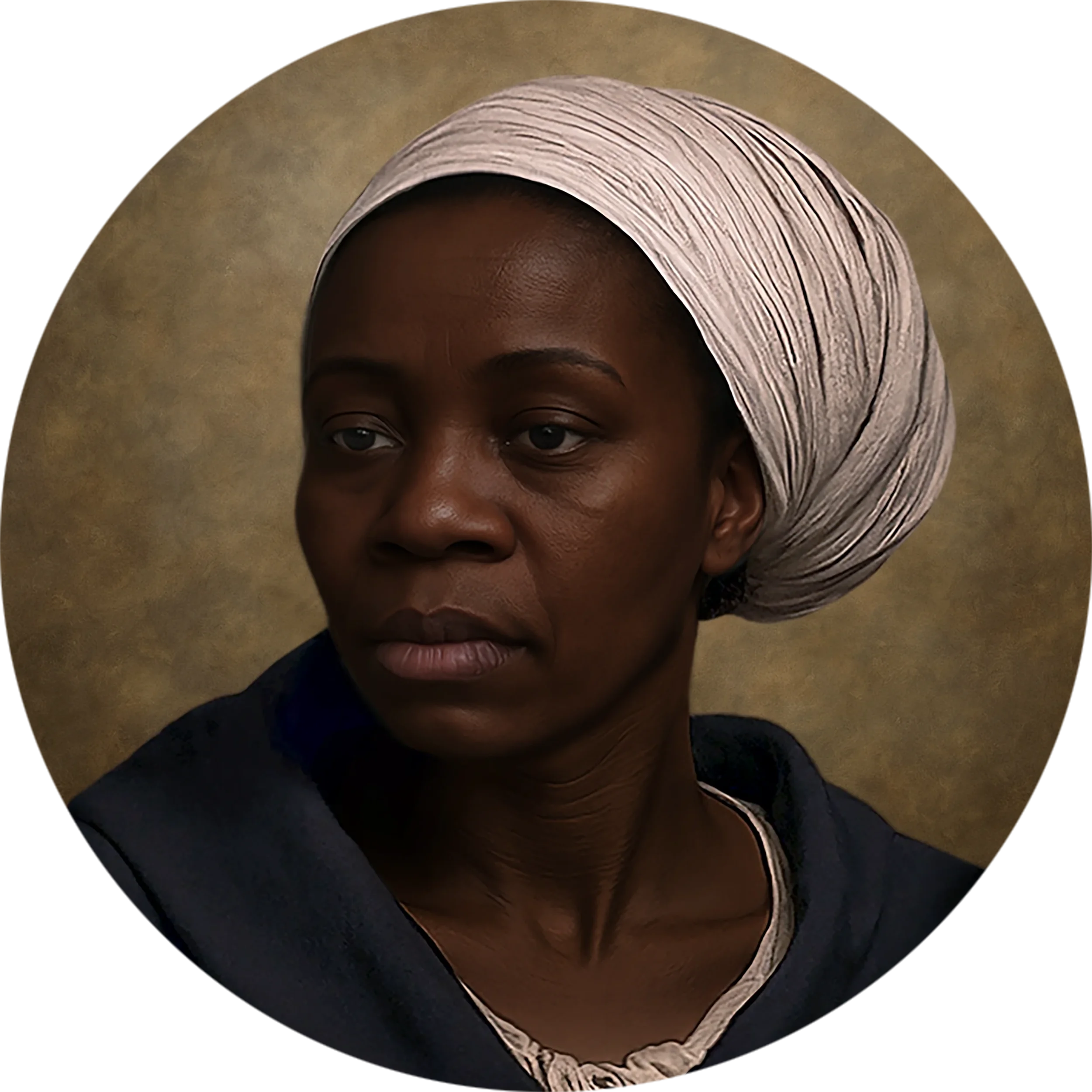
Daphne, C. 1740s - Before 1799
Daphne was an enslaved field worker at River Farm, one of the five farms that made up Washington’s plantation system. Like many women in the plantation workforce, she labored in the fields producing the crops that supported Mount Vernon’s economy.
When Washington inherited Mount Vernon, tobacco was the plantation’s primary cash crop. The crop required intensive hand labor to plant, weed, and prepare for market with the work carried out largely by enslaved women like Daphne. In the mid-1760s, Washington shifted the estate away from tobacco production and toward wheat farming, a change that altered the rhythms of plantation labor. Field workers who once planted tobacco by hand increasingly worked in the cultivation and harvesting of wheat and other grains.
Daphne was the mother of seven children. Records suggest that Joe later became a carpenter and Moses a cooper at Mansion House Farm, while Lucy remained connected to River Farm after marrying Cyrus, a postilion. Daphne appears in Mount Vernon records into the 1790s, when she was likely in her 50s, but records suggest she died before 1799.
Learn more about Daphne on the Faces of Mount Vernon’s Enslaved Community webpage.
The portrait
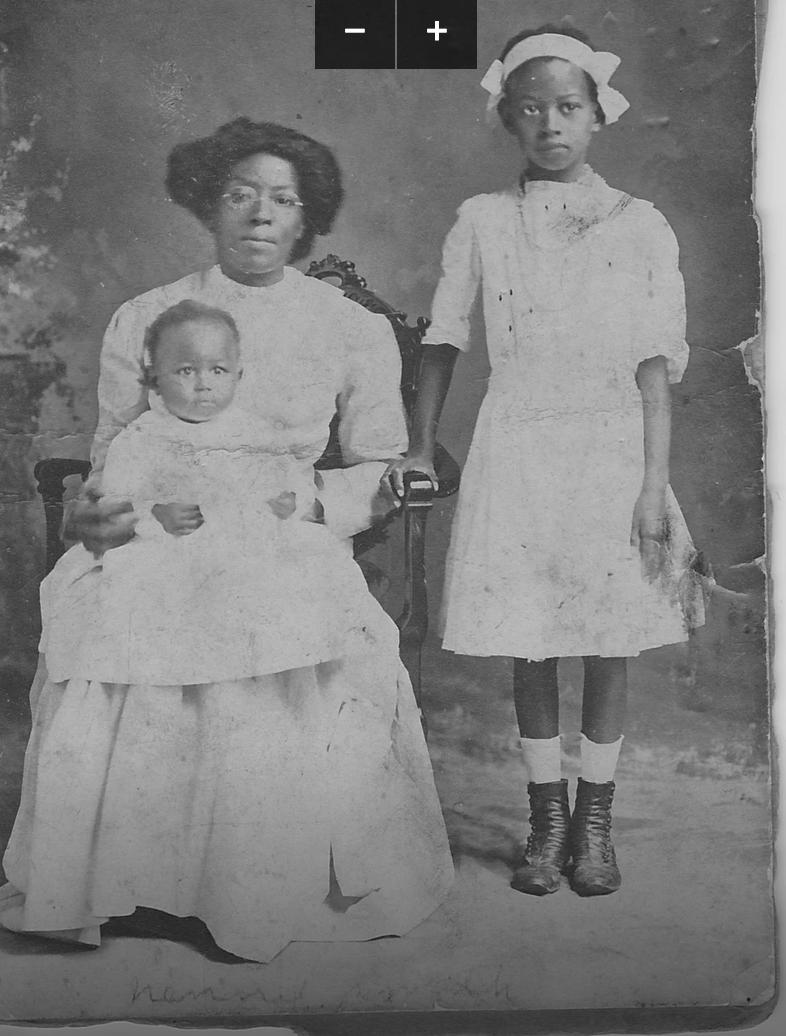
Annie Taylor is the 3rd great-granddaughter of Daphne, and Grace and Helen Smith are the 4th great-granddaughters of Daphne. Combined with written sources and oral traditions, the Napper family provided multiple generations of photographs and cultural direction to build the attributes of Daphne’s portrait. Courtesy, Cherryle Hooks, 6th great-granddaughter of Daphne via Mount Vernon.
Few personal details about Daphne survive in the historical record. Information about her life comes primarily from Mount Vernon farm reports, ledgers, and correspondence that document her work assignment as a field laborer and record the names of her children. These records offer glimpses of daily life; a ledger from 1792 notes that Daphne sold chickens to the Washington household and, in 1795, Washington wrote to farm manager William Pearce, remarking on the good behavior of Daphne’s children and suggesting they be considered for work in the garden.
The portrait of Daphne draws on contextual research about women’s agricultural labor at Mount Vernon. Clothing and styling reflect typical garments worn by field workers, including durable work clothing and a head wrap suited to agricultural labor.
Descendants of Daphne also shared multiple family photographs, which helped inform \general inherited features used in constructing the portrait. Together, these historical records, contextual research, and descendant photographs informed the creation of a portrait that reflects Daphne’s life at Mount Vernon.