
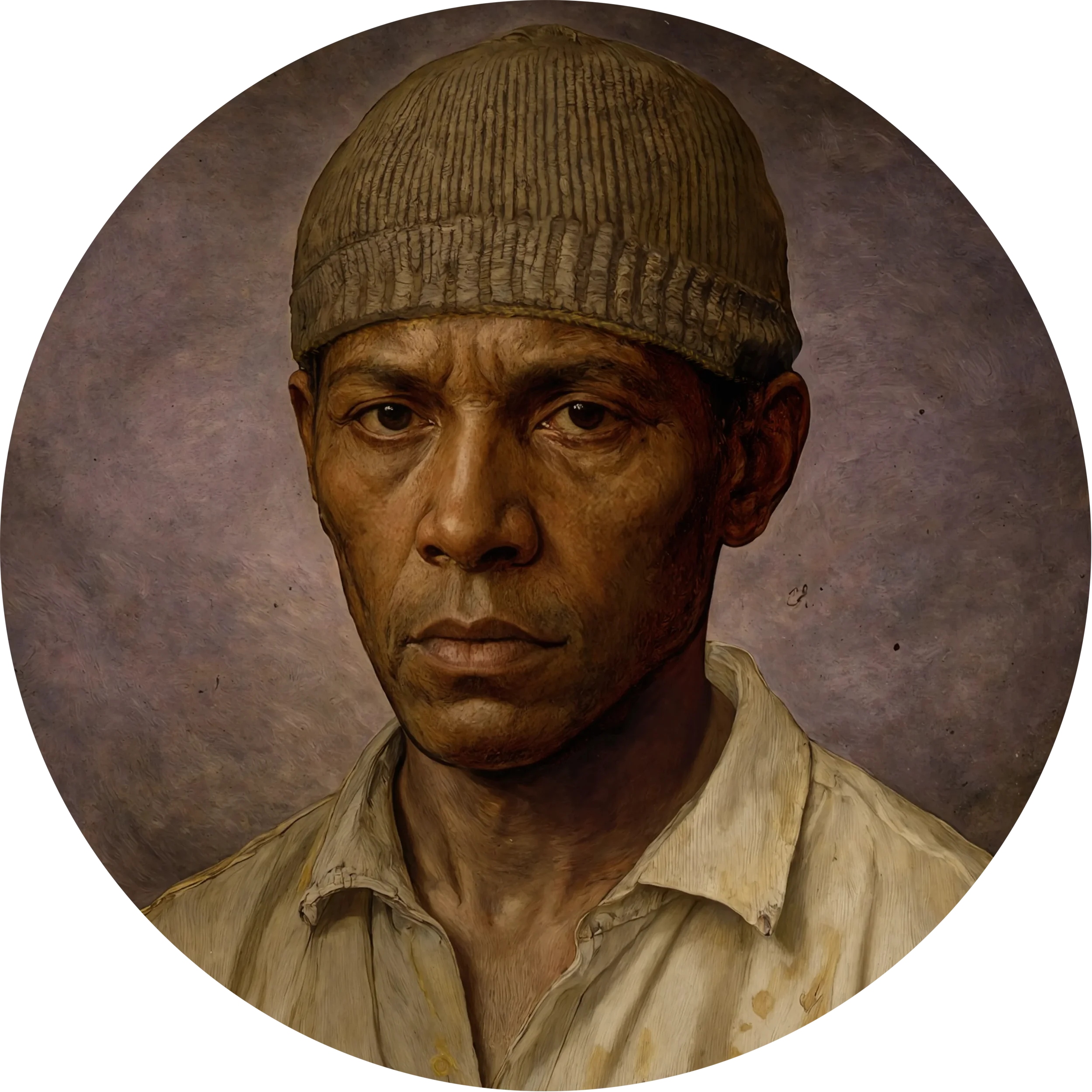
DAVY GRAY, C. 1743 - AFTER 1802
As an enslaved overseer, Davy Gray bore the responsibility of meeting Washington’s productivity expectations. Gray arrived at the estate in 1759 as part of Martha Washington’s dower share of enslaved workers. He began as a field worker and, by 1778, was assigned the role of overseer. By 1799, Gray served as overseer at Muddy Hole Farm, where he lived with his wife, Molly, and also managed agricultural work at River Farm and Dogue Run Farm.
As an overseer, Gray was responsible for supervising enslaved laborers and overseeing crop production. He stood out in this role, which was typically held by white men, and received certain privileges associated with his position, including leather breeches, occasional cash gifts, and housing with a brick chimney, which was more substantial than standard log cabins.
Historical records also document Gray’s advocacy on behalf of other workers. In 1793, he successfully persuaded George Washington to change a cornmeal distribution practice that left laborers hungry.
These records formed the basis for creating Gray’s portrait, emphasizing his role as a manager, advocate, and trusted figure within Mount Vernon’s enslaved community.
Learn more about Davy Gray on his Faces of Mount Vernon’s Enslaved Community webpage.