
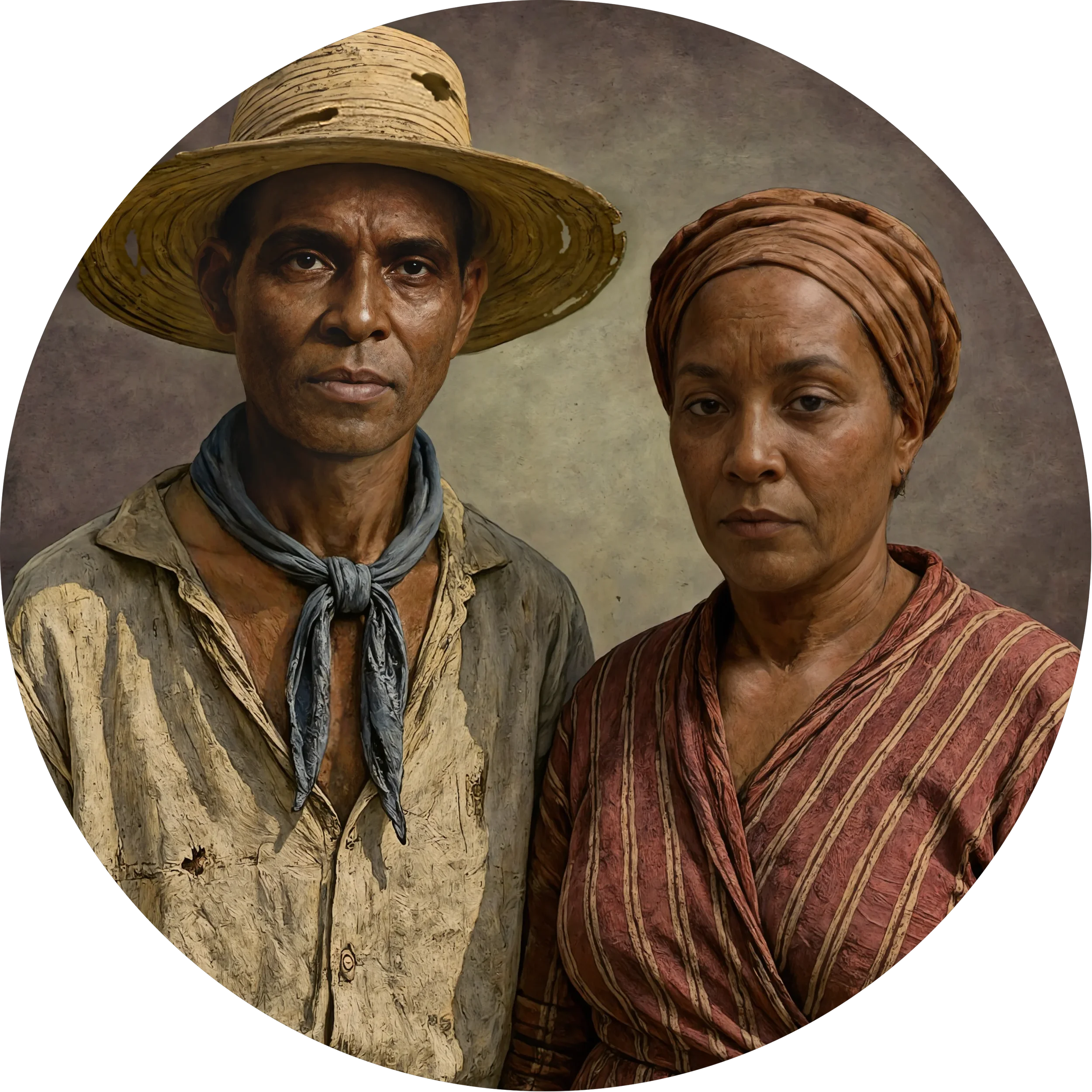
Myrtilla, C. 1750s - 1823
Boatswain, C. Before 1758 - After 1799
Married couple Myrtilla and Boatswain had at least five children: Lily, Ben, Harry, Lally, and young Boatswain. Enslaved at Mount Vernon, they were assigned work as a seamstress and ditcher, respectively.
Parenting under enslavement came with constant worry and a lack of control of their children’s safety. A cart accident kept young Boatswain close to his mother for three months when he was 12 years old. Two years later, following a long illness, he was assigned work as a ditch digger, a physically demanding job. Myrtilla advocated for a less strenuous job for her son, a request Washington considered suspicious.
Shortly after being transferred from Mansion House to Dogue Run Farm, young Boatswain died. Distraught, his mother was unable to work for three days.
Learn more about Myrtilla and Boatswain on the Faces of Mount Vernon’s Enslaved Community webpage.
THE PORTRAIT
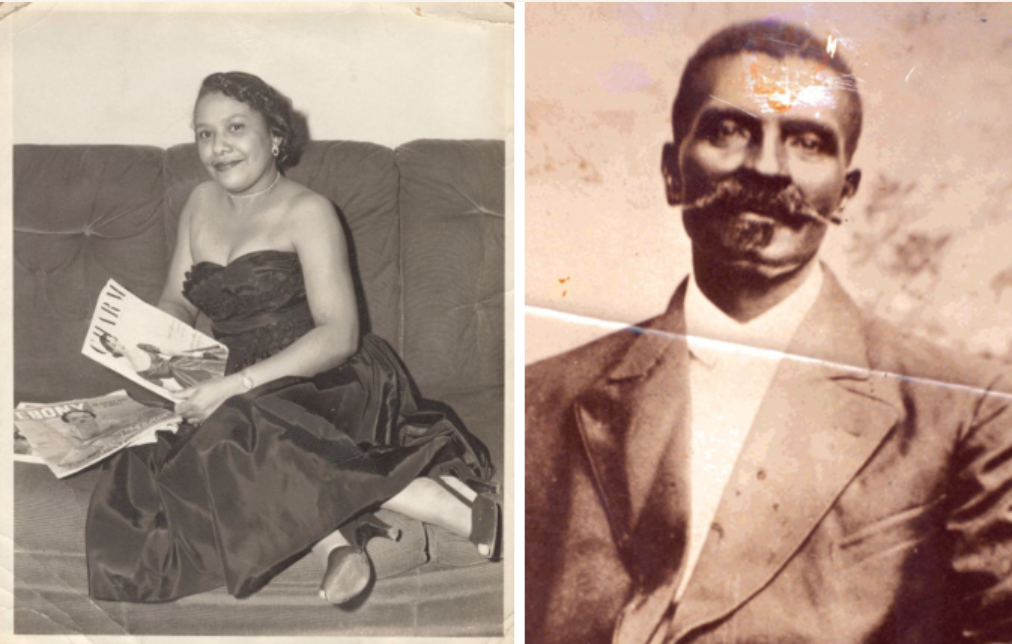
Florence Holland (1907–1976) is the 3rd great-granddaughter, and William W. Holland (1851 – 1941) is the grandson of Myrtilla and Boatswain. The Holland family provided photographs and cultural direction to build the attributes of their portrait. Courtesy, Holland Family, direct descendants of Myrtilla & Boatswain. Via Mount Vernon.
No visual depictions or physical descriptions of Myrtilla and Boatswain survive. To construct their portrait, Mount Vernon relied on a combination of historical documentation and contributions from descendants - most notably the Holland family, who are direct descendants of the couple. The family submitted modern photographs and cultural insights that helped guide facial attributes and expressions in the portrait, ensuring a grounded interpretation.
The portrait was also informed by written records from George Washington’s estate that reference the family and the challenges they faced. These sources, while not visually descriptive, provided essential context about their roles and resilience, shaping the mood, clothing, and presence of the portrait.
Myrtilla’s role as a spinner in the Mansion House influenced choices in dress and styling, likely a headwrap or short hair, and domestic work clothing. Boatswain, a field laborer and ditcher, is depicted with practical clothing appropriate for physical outdoor labor, and short-cropped hair or a cap.
Together, historical context and descendant contributions allowed for a portrait that reflects the dignity and strength of a family who endured hardship, loss, and labor while remaining deeply connected to one another.